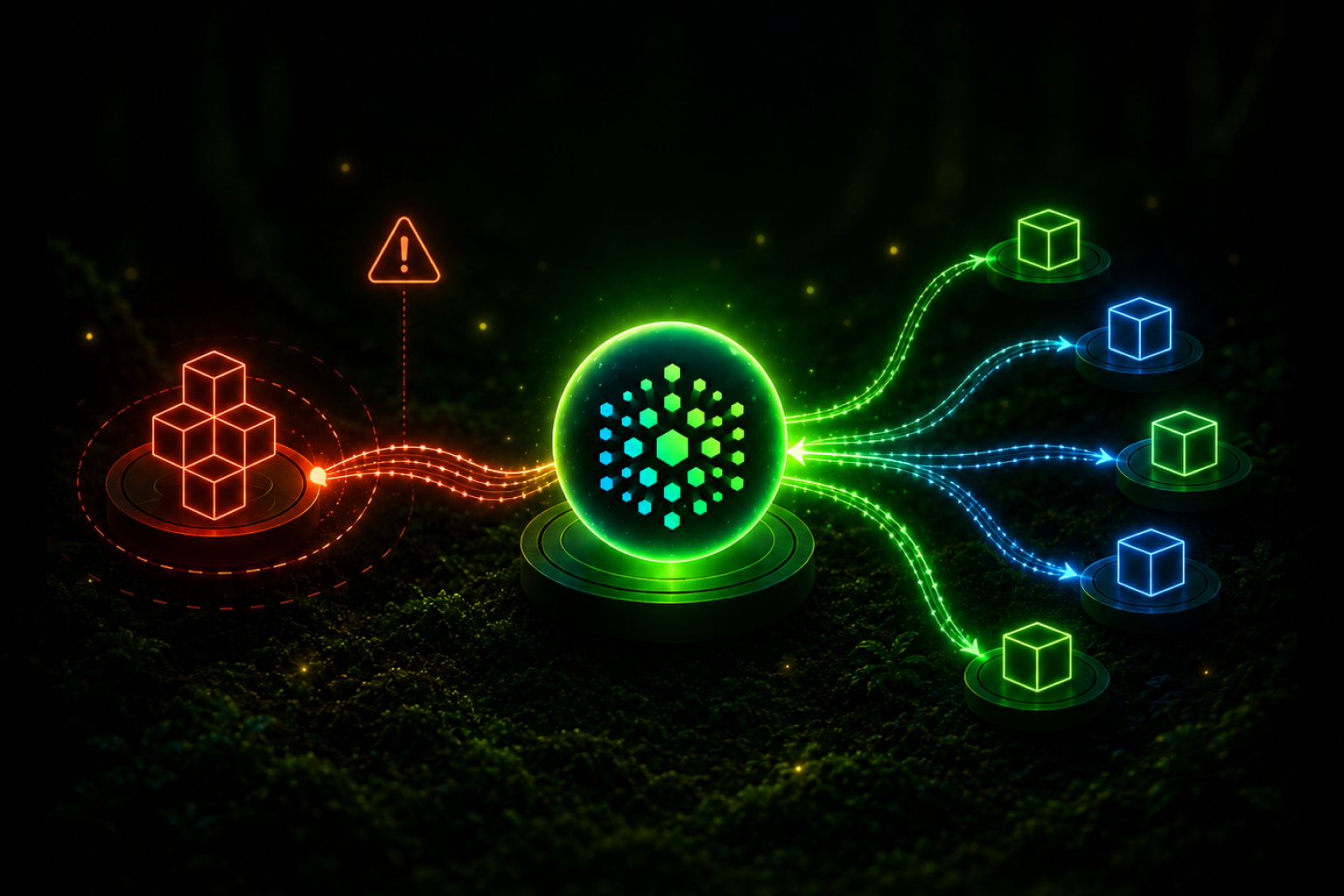
The Four Risks Hiding in Institutional Staking
Reading Time - 12 min

Staking gets sold as a passive line item. Lock the capital, collect the yield, check back next quarter. Though that’s not the full picture, and it’s costing institutional delegators money they don’t know they’re losing.
Most delegators who underestimate staking risk share the same blind spot. They weigh slashing heavily, because it is the risk everyone talks about. They barely account for technical failure at all. In practice, technical failure is both more likely to happen and more expensive when it does.
That is one of four risks we see recur, over and over, across every network we monitor at Polli.
None of them show up on an advertised APY. At Polli, on the other hand, we have prevented more than 10,000 risk-associated events across eight networks in two years. This pattern is consistent everywhere we look.
Here is what each risk actually costs a delegator, and what Polli does about it.
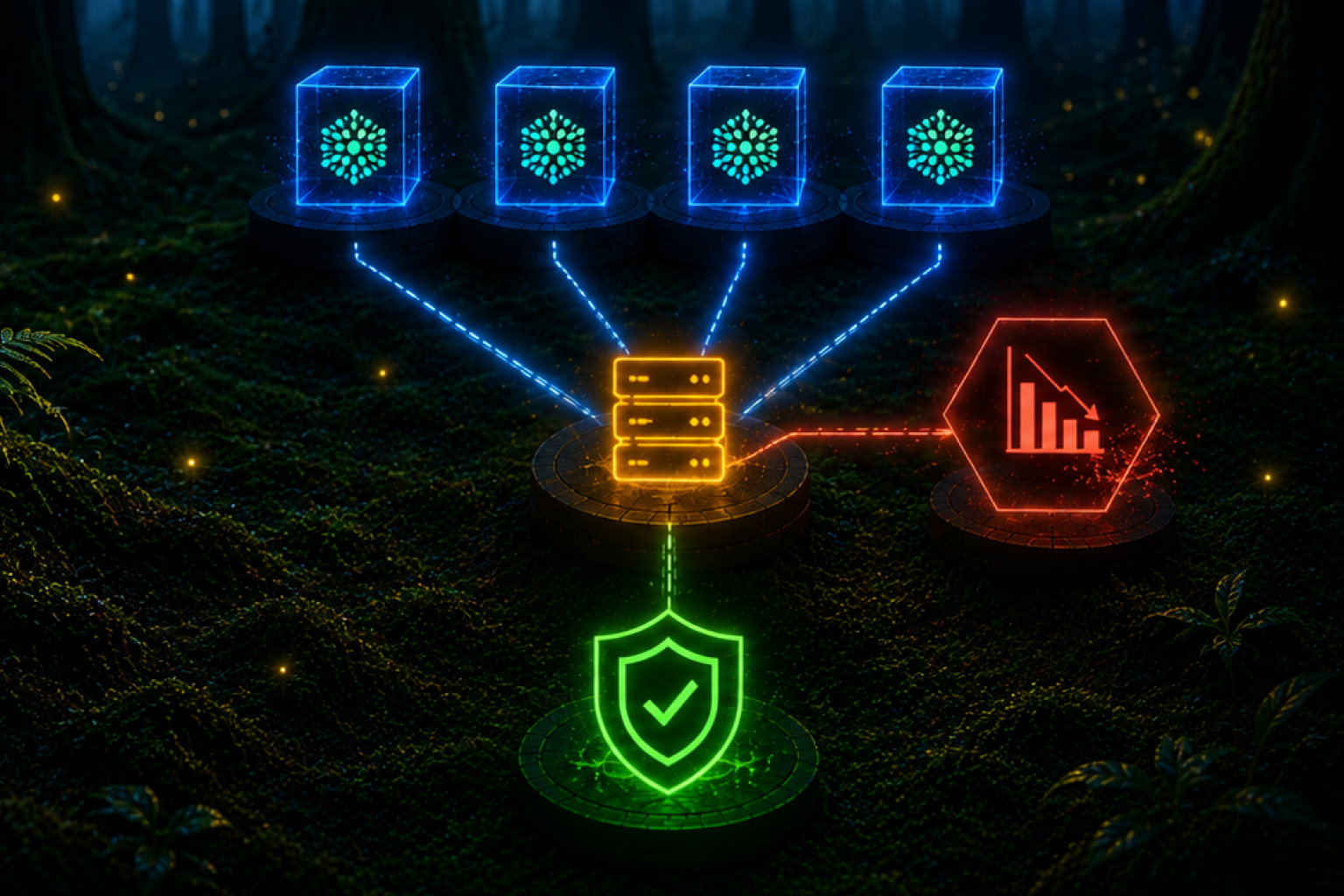
Risk 1: Silent Technical Failures, When Shared Infrastructure Fails Silently
At institutional scale, every basis point is real money. Underperformance is not a rounding error; it is tens or hundreds of thousands of dollars.
Take Solana, arguably the best staking network in the world, where a small number of data centers host close to half of all staked SOL, with one facility alone holding around 30% of total stake. That facility sees more frequent outages than most delegators would expect.
Here’s why this matters more than slashing: a missed epoch on Solana runs about 3 basis points, roughly $30,000 on a $100 million position. It could happen in two days without anyone noticing. The question is: when will it get noticed, and what would be the yield loss gained by the time it’s discovered?
At Polli, we track validator performance continuously. In every documented case where we exited a validator ahead of a failure, it never came back online. In one instance, this protected more than 30 million tokens for a single client, avoiding what would have cost them a quarter to half of their annual yield.
Technical failure becomes visible once you know where to look. The next risk doesn’t need an outage to hurt you.
Risk 2: Concentration: When a Few Validators Can Control the Network
Every blockchain network makes the same promise: no single party, or small colluding group, should control enough of the network to dictate what happens on it.
Concentration is when a handful of validators end up holding more voting power than the network’s design was meant to allow.
Two hundred validator names can look like diversification, but headcount doesn’t protect a network. Voting power is.
A small group holding enough of the vote can, in practice, influence or halt block production. They do not need anyone else’s agreement to do it.
That risk exists even when nothing has been hacked, and nothing has gone offline, which is exactly why it is a governance and censorship risk rather than a technical one.
In the US, this is not just an industry concern. A 2025 submission to the SEC Crypto Task Force explicitly called for institutional staking participants to manage and disclose risks from validator concentration.
How Polli deals with concentration risk
Polli’s routing is built to support decentralization directly, rather than mirror a network’s existing top-heavy distribution. On Cosmos, 92% of the redelegations we have executed have been driven by concentration.
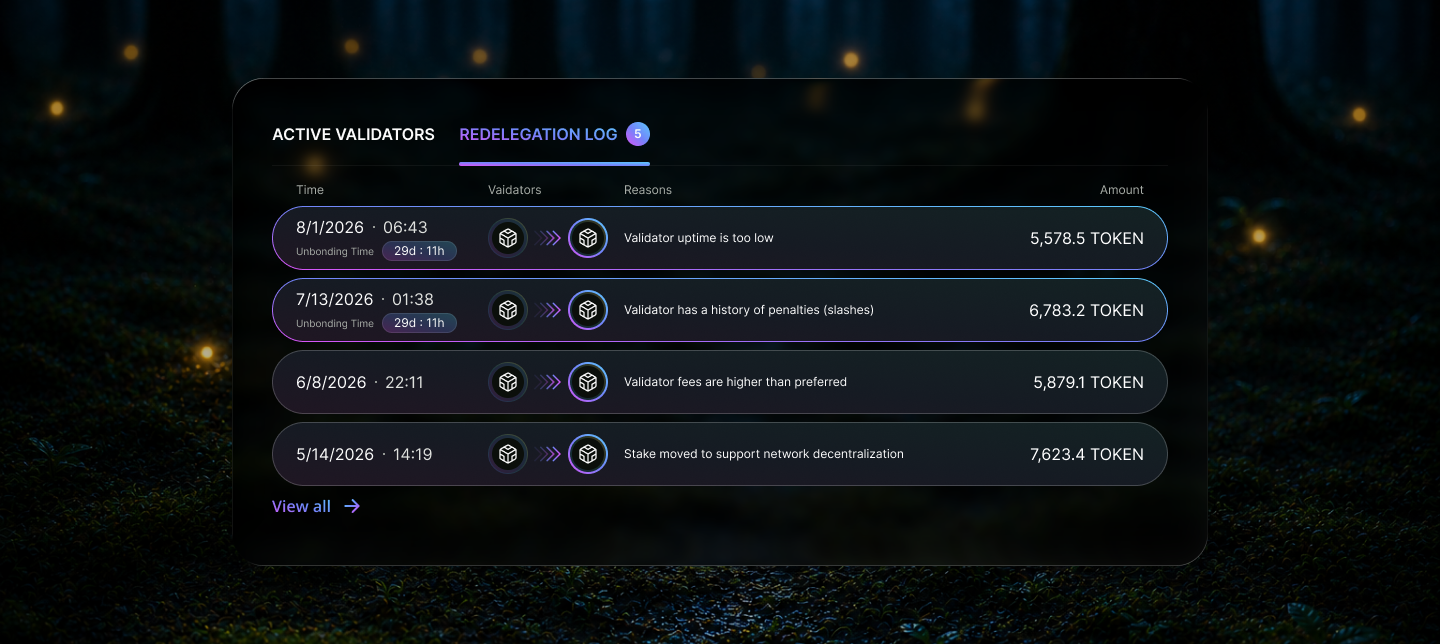
We have moved weight toward smaller validators that perform well and contribute to network health, and that earn the right to be compensated for it.
Top-performing validators, including many that deserve far more delegation than they receive, benefit from this approach.
Concentration is a structural risk you can measure once you know what to look for. The next risk is harder to catch, because it hides in how failures get recorded in the first place.
Risk 3: The Slashing Blind Spot, Why Jailing Goes Unseen
Slashing and jailing get treated as the same thing. They are not, and the difference matters more than most delegators realize.
What is slashing?
Slashing is a financial penalty, typically triggered when a validator goes offline or, far more rarely, double-signs a block. Offline slashing usually costs somewhere between 0.01% and 0.1% of staked principal, a real but genuinely small number. Some networks don’t slash at all, making downtime the real risk.
Double-signing slashing is more severe, closer to 5% of principal, but it is also exceptionally rare. This means the validator would get a high penalty and would be completely removed from the set.
At Polli, we haven’t documented a confirmed case because a validator that double-signs destroys its own reputation in the process and is banned from the network.
How is jailing different from slashing?
Jailing is a different mechanism entirely. It removes a validator from the active consensus set, usually for downtime, and puts it in a cool-down period until it is ready to rejoin. The risk is that the validator’s return time is unknown and can take a long time. It pauses reward generation and increases the cost of lost yield returns.
When Polli sees a validator heading toward either outcome, we exit ahead of it and redelegate away, on every network where these mechanisms apply.
Risk 4: Silent Abandonment, When a Healthy Validator Quietly Leaves
The fourth risk is the hardest to see, because nothing about it looks broken.
A validator can perform well, publish its intent to leave the network, and still have delegators sitting on it, unaware, weeks or months later.
The principal is not at risk. The capital simply stops working. It is a pure opportunity cost, and it compounds the longer no one notices.
It also hurts the network directly. Tokens locked in an inactive validator don’t contribute to consensus or security. They are just sitting there. We saw this firsthand on one of our client’s networks, where 80 million tokens sat in inactive validators before Polli came on the network and redelegated them to active validators.
This is where tracking behavior over time, not just current status, matters. At Polli, we read validator intent to exit before the validator fully leaves the consensus process, and move capital out ahead of it.
A validator can maintain full uptime and normal block production right up until this happens, which is exactly why uptime and commission alone are not sufficient signals.
Stake trajectory is a distinct signal, and most tools don’t track it at all.
You can read more in our article on how this fits into a broader allocation approach.
Why Opportunity Cost Is the Real Risk in Staking
Set-and-forget is not a real concept. Something will happen, on some network, at some point.
The question is not if. It is what it costs you, and whether you find out in time.
Every second your capital sits idle is an opportunity cost, and that’s the real risk here, not slashing. Slashing is still, by comparison, insignificant next to the technical faults validators carry.
And this risk is only getting bigger. Performance demands from validators are rising, costs are rising, yields are compressing. That puts more weight on ongoing allocation, not less.
That is exactly why I founded Polli. As both a staker and a validator, I saw firsthand that the returns a network promises aren’t always the returns you actually get. Very few validators consistently close that gap. The ones that do are the big institutional names, and they deserve real credit for it. They are pillars of many of the largest networks.
But as a delegator, staking means accepting an opportunity cost: the risk that your capital could be working harder somewhere else, in real time. You can’t track real-time efficiency by hand. That’s what we built Polli to do.
You do not see a problem until you feel it. In staking, when you feel it, your capital is at risk.
Learn more about how Polli works.
FAQs about Staking Risks
What is validator concentration risk in staking?
A few validators controlling a large share of voting power, enough to halt block production or censor transactions without needing anyone else’s agreement. It is a governance risk, not a hack or outage.
What is the difference between slashing and jailing in crypto staking?
Slashing is a financial penalty, usually 0.01 to 0.1% of stake for downtime. Jailing removes a validator from the active set without losing principal.
How can a validator look healthy and still lose most of its delegated stake?
Standard validator scoring typically weighs uptime, commission rate, and block production. A validator can maintain full uptime and keep producing blocks while its delegators are actively withdrawing their stake, since these are two separate signals. Without tracking stake trajectory over time, this kind of quiet outflow can go unnoticed until it is substantial.
Is staking with a diversified set of validators actually safe?
Diversifying across validator names does not remove infrastructure risk. Many “independent” validators share the same data centers, so one outage can hit several names at once. True diversification includes infrastructure, not just names.
Note: This material is for informational purposes only and does not constitute investment advice or a recommendation. Case examples are historical and illustrative; they do not project or guarantee future results.

August 6, 2026
August 31, 2026