
Institutional Crypto Portfolio Allocation: A Guide for Asset Managers
Reading Time - 11 min

Cryptocurrency has become an accepted emerging risk asset class.
Today, tier-one global banks and wealth managers, from Morgan Stanley to Fidelity, recommend that their clients consider allocating up to 5% of their portfolios to digital assets to optimize growth.
For institutions and fund managers, the conversation has officially shifted from whether crypto belongs in a modern portfolio to how to structure it professionally.
Buying, holding, and securing the digital assets is one thing. Generating yield on top of the holdings is another.
This guide outlines an institutional digital asset allocation strategy and how crypto staking can help maximize the crypto portfolio.
What Is Crypto Portfolio Allocation?
Crypto portfolio allocation is the process of dividing an investment portfolio among digital assets to maximize returns relative to risk.
While retail investors might allocate the majority of their net worth to tokens based on “conviction,” professional institutions look at the bigger picture. Institutions evaluate:
- How crypto affects their total portfolio risk
- Its correlation with other traditional markets, and
- Volatility based on historical drawdowns
In digital asset management, institutions further break down their crypto portfolio allocation according to a tiered asset model. Investors should not treat all cryptocurrencies the same, and rightfully so.
Here’s what that tiered model looks like:
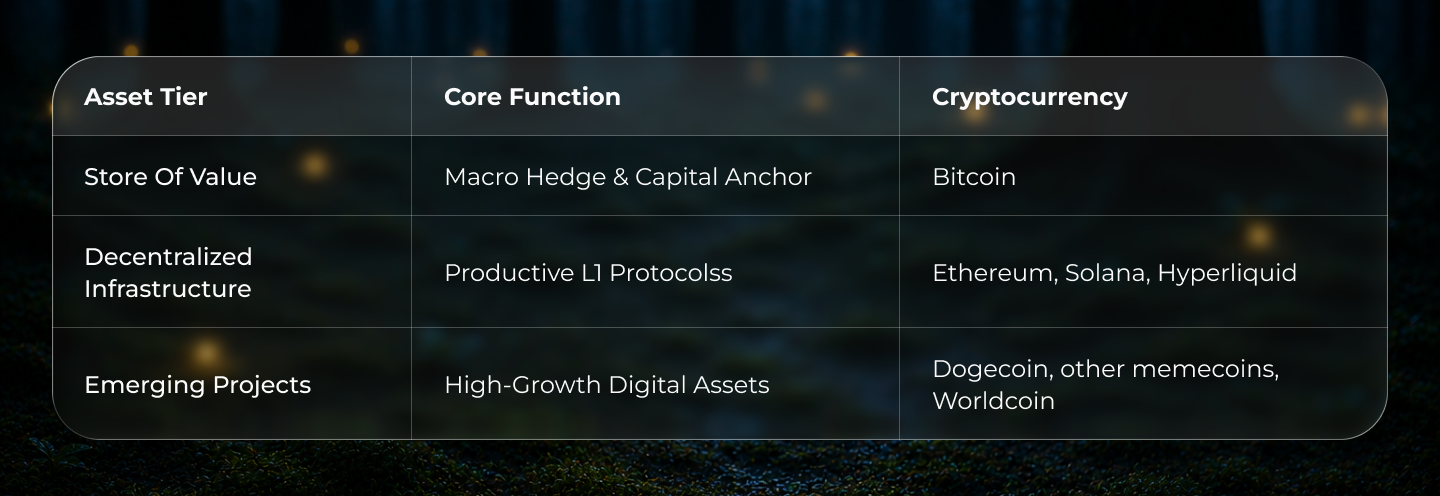
- Store of Value: Bitcoin is head and shoulders above the rest and has its own category. When wealth managers recommend a crypto investment, they will most likely recommend Bitcoin only. This stance is due to Bitcoin’s proven track record and value relative to other digital assets.
- Layer-1 (L1) and Utilities: This tier covers Ethereum, Solana, Hyperliquid, etc. They are productive assets that can earn yield from staking or decentralized finance. Many exchange-traded funds target Layer-1s to achieve maximum growth.
- Emerging Projects: This bucket includes memecoins such as Dogecoin and smaller utility projects, like identity protocol World. They carry higher risk but offer tremendous growth potential.
Why Portfolio Allocation Matters for Institutions
Institutions carry fiduciary responsibility, or a legal obligation to do what’s in the best interest of their clients.
As digital assets exhibit extreme price volatility, an unmanaged crypto position could alter the portfolio’s risk profile. An incorrect allocation in the riskiest digital-asset tier could wipe out a large percentage of the portfolio when the market worsens.
Morgan Stanley’s October 2025 report, titled “Asset Allocation Considerations for Cryptocurrency,” illustrated crypto’s volatility relative to traditional financial assets.
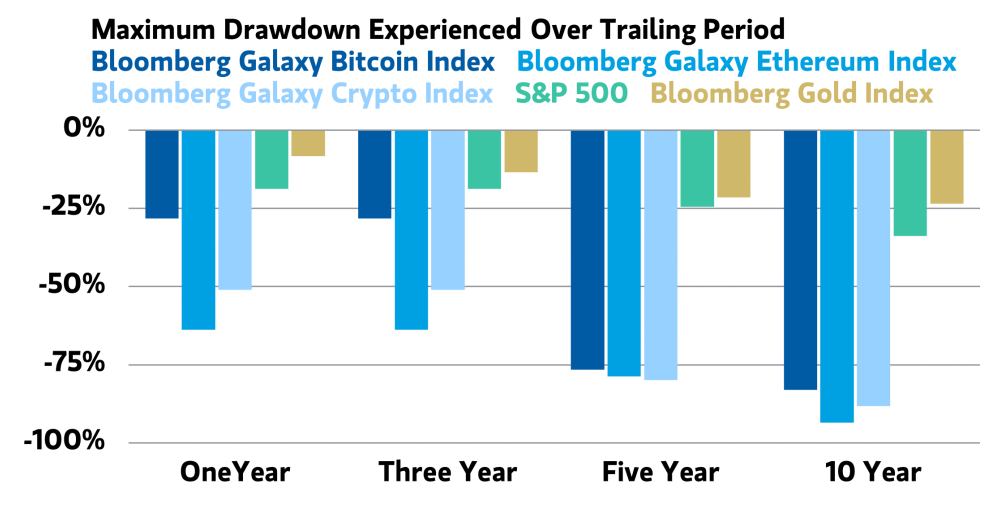
Over the past year, Ethereum and the Bloomberg Galaxy Crypto Index (which tracks the top 5 largest cryptocurrencies) fell by over 50%. Riskier cryptocurrencies are down even more, with some close to 90% over the past year.
Morgan Stanley’s models also revealed that while a modest crypto allocation can optimize returns, it also disproportionately increases the portfolio’s total volatility.
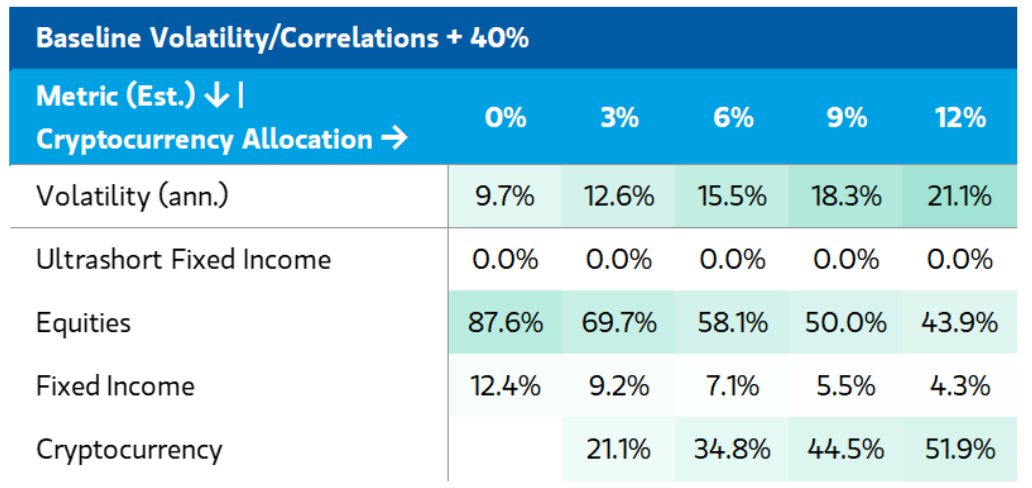
In an extreme case, a 12% crypto portfolio allocation increases the entire portfolio’s volatility from 12.6% (under the 3% crypto allocation) to nearly double, to 21.1%.
The research recommends starting the crypto portfolio allocation at 3% to limit potential volatility.
The Role of Staking in Crypto Portfolio Allocation
Once institutions have chosen which cryptocurrencies to hold and how much to allocate, the question becomes how to maximize these holdings.
Equities, corporate bonds, and government treasuries offer yield through dividends or interest. Bitcoin does not. Staking-related networks offer similar yield opportunities but require a more involved approach.
Layer-1s such as Ethereum and Solana issue new tokens to reward validators. This inflationary issuance secures the network and keeps operations running. Locking these tokens passively in cold storage potentially dilutes the position.
When viewed through this lens, staking isn’t just a strategy to chase extra yield. It’s a mandatory tool for maintaining holdings.
How Staking Improves Portfolio Performance
When properly integrated into an institutional crypto portfolio, staking changes the math of a digital asset allocation:
- Creates Predictable Returns: Staking rewards turn static spot holdings into cash-generating ones. This yield is recognized as income on the corporate balance sheet.
- Mitigates Volatility: Consistent staking yield dampens the portfolio-level impact of sudden token price fluctuations.
- Unlocks Compound Growth: By systematically reinvesting those staking rewards back into the network, the portfolio creates an opportunity for exponential compound growth.
However, executing an optimized staking strategy introduces significant operational friction.
The Traditional Challenges of Staking
Manually choosing validators, tracking validator deterioration, and navigating multi-chain staking options create an unsustainable burden for internal operations.
Internal teams end up trapped in infrequent manual tracking cycles, spending days reviewing on-chain data. Once the team can come up with a recommendation, the market has already moved.
We’ve explored these challenges in our guide, The Allocation Problem: Crypto’s Most Expensive Blind Spot.
To achieve optimal capital efficiency, institutions must transition from manual tracking to policy-driven, automated infrastructure layers.
How Polli Solves Institutional Staking Challenges
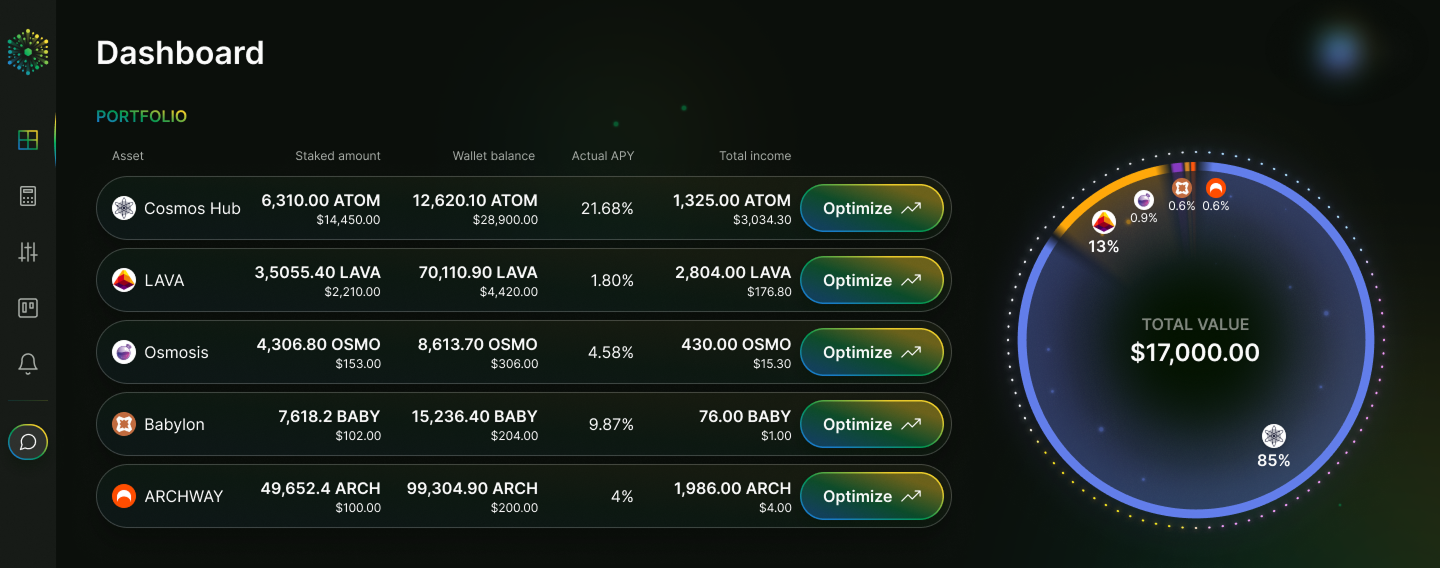
Polli is a non-custodial allocation intelligence layer built for institutional digital assets. Rather than acting as a passive dashboard that highlights what has already occurred, Polli functions as an automated execution engine.
The system bridges the gap between investment policies and the fast-moving reality of on-chain networks.
Polli completely automates and streamlines staking infrastructure in several ways:
Eliminating Validator Drift
With Polli, institutions define their risk policies, such as validator-quality metrics and network-diversification parameters. The intelligence engine then takes over, continuously monitoring the on-chain landscape in real time.
If a validator raises its fees or shows early warning signs of degradation, Polli re-delegates staked positions. Manual oversight and validator drift disappear.
Consolidating Multi-Chain Workflows
Polli unifies your entire multi-chain proof-of-stake portfolio into a single view.
It standardizes validator analysis, redelegations, and reward compounding across different networks. Institutional teams can engage in staking operations without adding significant overhead.
Polli currently serves as a top intelligence allocation layer for Cosmos, Lava, Solana, and Bitcoin.
Delivering Automation via a Non-Custodial Architecture
The fatal flaw of crypto active management is the introduction of counterparty or smart-contract risk. Polli solves this through a non-custodial crypto management framework. Institutions take full custody of their funds without wrapping them in complex, vulnerable third-party protocols.
By utilizing native protocol features, Polli requires minimal permissions to claim rewards and re-delegate automatically. Institutions can connect through their existing enterprise custody setups.
Concluding Thoughts
As digital assets solidify their place as a legitimate risk asset class, an edge belongs to allocators who can properly manage their crypto portfolio allocations. It starts with asset selection, rebalancing, and generating yield on the assets.
When it comes to crypto staking management, relying on slow processes to track a 24/7 on-chain market is a mismatch. It is one that exposes organizations to risk concentration, validator drift, and costly inflationary dilution.
By deploying a policy-driven, non-custodial automation layer like Polli, institutions can eliminate bottlenecks and ensure their crypto portfolios remain optimized.
Frequently Asked Questions
What is crypto portfolio allocation?
Crypto portfolio allocation is the distribution of an institution’s capital across different digital assets to maximize returns while managing overall portfolio risk.
How much of a portfolio should be allocated to crypto?
For institutions, starting the crypto portfolio at a minimum size helps control volatility in times when the allocation may grow due to favorable market conditions.
Wealth managers like Morgan Stanley and Fidelity recommend a disciplined allocation of up to 5% to boost overall growth without over-exposing the broader portfolio to extreme volatility.
What is the best strategy for institutional crypto portfolio allocation?
The most effective approach is a policy-driven, tiered asset strategy that anchors the portfolio in high-liquidity assets such as Bitcoin. The portfolio can also explore deploying into layer-1 holdings with automated and non-custodial staking to outpace network inflation.
How often should a crypto portfolio be rebalanced?
Wealth managers recommend rebalancing quarterly or semi-annually. As crypto prices fluctuate, the initial allocation could grow versus the entire portfolio. This growth would entail higher volatility across the total portfolio. It’s essential to rebalance periodically.
What is the difference between crypto portfolio allocation and crypto staking?
Crypto portfolio allocation is the strategic decision of how capital is divided among various digital assets, whereas crypto staking is a mechanism used to secure networks and earn on-chain rewards.

June 5, 2026
June 5, 2026