
The Institutional Guide to Crypto Asset Management Platforms
Reading Time - 11 min

Managing significant on-chain capital has evolved past simple security.
For institutions, the real challenge is operational. Managing risk, ensuring compliance, and preventing capital erosion across a multi-chain ecosystem.
Manual oversight is no longer sufficient when portfolios diversify across networks.
Staking rewards sit uncompounded, validator performance drifts, and engineering teams spend weeks executing manual governance updates. To eliminate these inefficiencies, allocators adopt enterprise-grade infrastructure.
This guide provides a framework for evaluating these enterprise-grade crypto asset management platforms.
What Is a Crypto Asset Management Platform?
A crypto asset management platform is infrastructure that enables institutions to manage digital assets through a unified interface. Unlike retail-facing wallets or block explorers, an enterprise-level platform translates blockchain interactions into institutional workflows.
These platforms enable oversight of operations such as:
- Asset custody
- Portfolio allocation
- Trade execution
- Multi-chain staking
- Compliance and reporting
Think of these platforms as operational control centers. Instead of requiring engineering teams and technical personnel to manage multiple exchanges and block explorers, the platform unifies the actions and data.
The right platforms can transform digital assets into actively optimized and productive capital.
Key Criteria in Choosing a Crypto Asset Management Platform
When choosing an institutional crypto management partner, your team should evaluate how platforms perform across several critical verticals.
1. Non-Custodial Architecture
Institutional teams require digital asset ownership and sovereignty.
The platform enables organizations to manage their own funds and private keys. They function as an execution layer that interfaces directly with an institution’s custody setup. These setups usually involve enterprise multi-sig frameworks, hardware security modules, or institutional custody providers.
2. Active Management and Dashboards
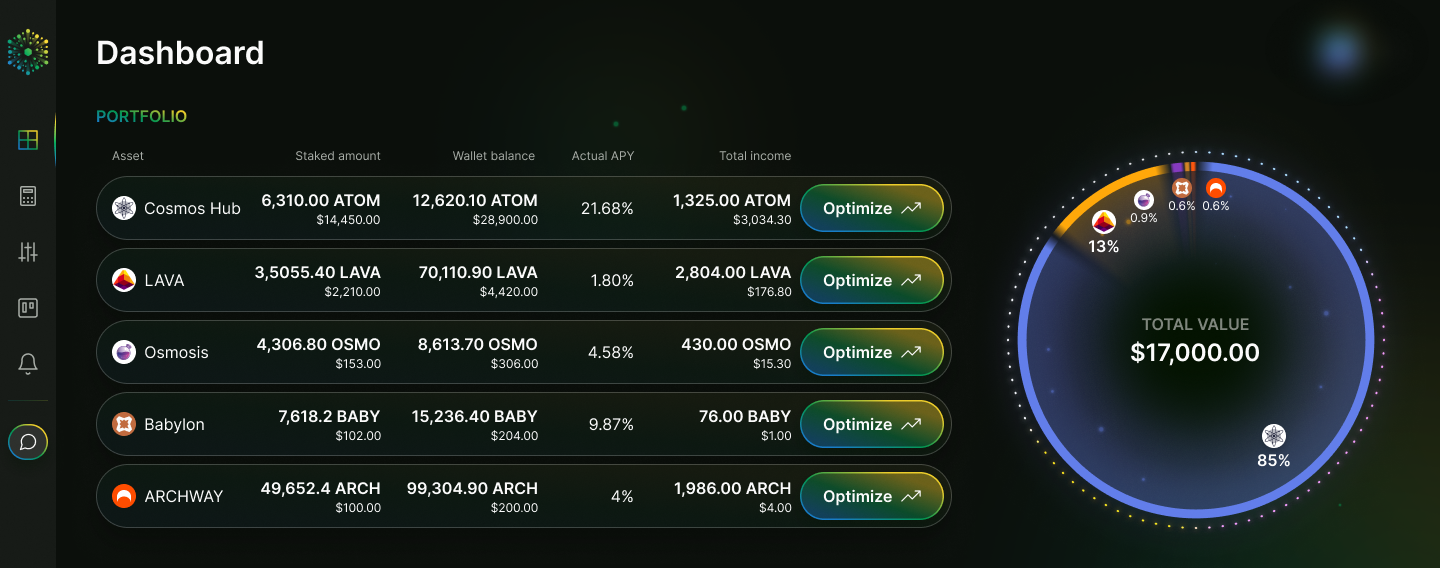
For large portfolios, passive portfolio monitoring results in execution delays and missed compounded yield.
Institutions should invest in a platform built for automated optimization. Whether that optimization takes place in DeFi or staking, it should be able to navigate lending platforms, vaults, gas costs, and validators.
This optimization helps the organization generate higher-than-market returns while reducing possible losses.
3. Policy Controls and Governance
Institutions require control over who can propose and approve transactions. Crypto protocols may manage these processes through councils and decentralized autonomous organizations (DAOs) voting.
TradFi allocators looking to get into digital assets require a similar approach. Controls allow teams to set guardrails, such as multi-signature approval, for withdrawals. Or a maker-checker system when executing trades.
In other platforms, governance also guides the investment decisions. These policies include capping maximum validator commission rates or establishing network decentralization targets.
To see how these moving parts intersect to protect institutional capital, allocators can read our comprehensive framework in What Is Allocation Intelligence? The Framework Redefining Institutional Crypto Yield.
4. Continuous, Real-Time Monitoring
For institutions, there is an understanding that risk comes with returns. Digital assets can magnify both sides of this, given their 24/7 nature.
Fr staking-related platforms, real-time portfolio monitoring features verify asset placement, accrued rewards, historical validator uptime, and network health metrics.
With a real-time view of your portfolio, your team and the platform can adjust to sudden yield drops or network degradations that could erode returns or wipe out capital.
To see the data comparing passive versus active management models side-by-side, check out our guide on Cosmos Staking: Staking Yield Dashboards vs Automated Solutions.
5. Multi-Chain Coverage
A handful of institutions focus on select networks such as Ethereum and Solana. While this is a valid strategy, the modern crypto portfolio is inherently multi-chain.
Unified software can manage positions across diverse ecosystems and consolidate different network metrics into a single reporting view.
By choosing a multi-chain platform, your team can future-proof its portfolio.
6. Compliance and Institutional Reporting
Accounting and regulatory reporting are major headaches for digital asset funds and foundations.
Platforms must generate clear, exportable financial data that complies with standard accounting principles. This data includes tracking cost-basis data for staking rewards and auditable performance reports that satisfy both internal stakeholders and external regulators.
7. Track Record and Institutional Trust
Transparency and a track record of security are non-negotiable.
Look for providers that have successfully deployed with major layer-1 foundations, protocol treasuries, and heavily regulated crypto funds.
Organizations ready to scale their returns without altering their foundational risk settings can read more in our brief on Extra Yield. No Extra Risk.
Top Crypto Management Platforms
There are several strong platforms, each built for different use cases and institution types. The right choice depends on what problem the organization is trying to solve: custody, trading infrastructure, or active staking optimization.
Institutions may combine multiple management platforms to meet their needs.
Polli for Allocation Intelligence
Polli provides policy-aware, non-custodial, and always-on allocation intelligence for staking yield. Allocation Intelligence is the continuous, data-driven process of monitoring, routing, and rebalancing capital.
For institutions managing significant staking positions, Polli serves as an active execution engine.
- Policy-Bound Execution: Institutional users define their limits on network decentralization and validator selection criteria. Polli then automatically executes against those rules in real time.
- Strict Non-Custodial Architecture: Polli never takes custody of assets. Instead, institutions connect through their multi-sig structure or institutional wallet provider. The platform leverages protocol-level features and minimizes signing.
- Proven Institutional Trust: Trusted by blockchain foundations, Polli is actively partnered with major networks, including Lava Network and KiiChain, to streamline their treasury operations.
Polli’s platform caters to foundations, DAOs, and institutional fund managers who need a continuously managed staking strategy. Whether it’s on Cosmos, Lava, Solana, or Bitcoin, you can shift from a set-and-forget strategy to an active one.

The Lava Foundation is currently maximizing Polli’s allocation infrastructure. That partnership demonstrates how a system can continuously evaluate validator performance while intelligently delegating in real time. It’s scalability in practice.
Fireblocks for Enterprise Security
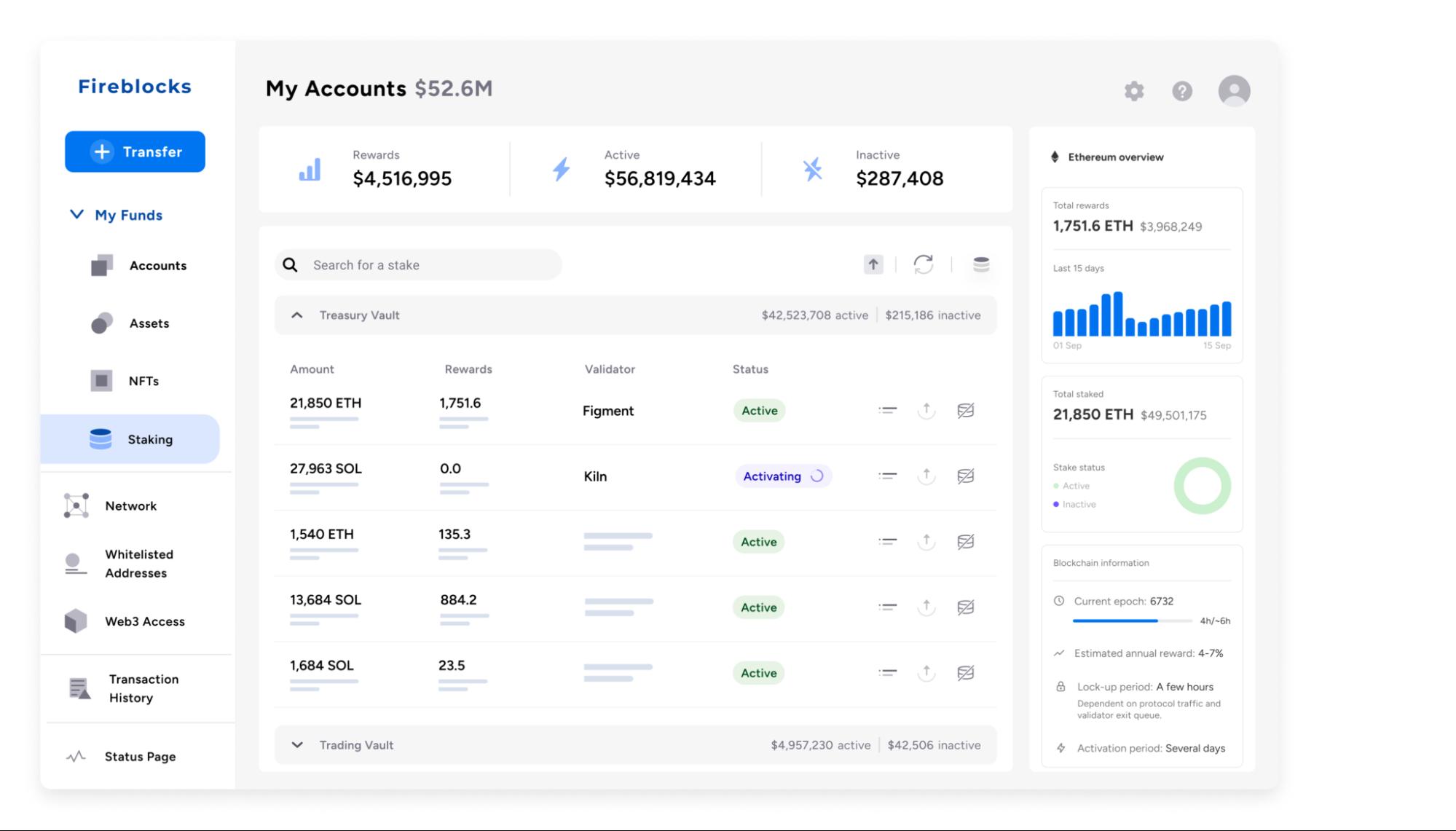
Fireblocks focuses more on digital asset custody, treasury management, and settlement operations.
-
- Multi-Party Computation (MPC) Wallet Architecture: MPC eliminates a single point of failure. For institutions, this is not only the gold standard for security but also allows them to build custom approval workflows.
- Wallet-as-a-Service (WaaS): Fireblocks wallets enable developers to deploy and manage non-custodial MPC wallets directly into their applications without exposing users to seed phrases or gas fees.
- Agentic Network: The company is a member of the x402 Foundation. Fireblock’s agentic payment suite allows for agent-initiated payments using stablecoins. With the rising adoption of AI, they are one of the first institutional providers to move on this narrative.
Institutions that need enterprise-grade custody and transfer infrastructure can use Fireblocks to connect to institutional staking providers.
Anchorage Digital for Digital Asset Banking
Anchorage Digital is a premier institutional platform providing full-service crypto banking, asset management, and regulated custody infrastructure.
- Federally Regulated Custody: As America’s first federally chartered digital asset bank, the institution benefits from a regulated custody framework.
- Unified Fiat and Crypto Services: Integrates traditional banking services with digital assets. Customers can benefit from interest-bearing USD deposit accounts, virtual sub-accounts, and SWIFT transfers.
- Advanced Institutional Trading: Through Anchorage Digital Prime, clients can access deep liquidity and OTC trading desks.
U.S.-based institutions typically look at Anchorage given its support for comprehensive, bank-grade regulatory compliance and the safety of a qualified custodian.
Closing Thoughts on Choosing the Best Platform
Selecting the ideal crypto asset management platform depends on your team’s operational needs. These needs often require you to combine platforms to solve for regulated custody, deep trading liquidity, or continuous staking optimization.
By aligning regulatory requirements and risk thresholds with the right infrastructure, institutions can eliminate costly manual bottlenecks, protect against yield erosion, and ensure their on-chain capital is actively working under their full control.
Frequently Asked Questions
What is a crypto asset management platform?
A crypto asset management platform is an enterprise software solution designed to help institutions centralize their digital asset portfolios and activities.
What is the difference between a crypto asset management platform and a crypto exchange?
A crypto exchange is a trading venue to facilitate buying and selling. A crypto asset management platform is a non-custodial overlay that connects to your secure wallets.
Is crypto asset management safe for institutions?
Yes. Crypto asset management platforms specifically cater to institutions. Some platforms may come with a banking license or asset insurance.
What is non-custodial crypto asset management?
Non-custodial crypto asset management is an architectural approach where the absolute custody, private keys, and signing authority remain entirely with the asset owner.

June 1, 2026
June 1, 2026